


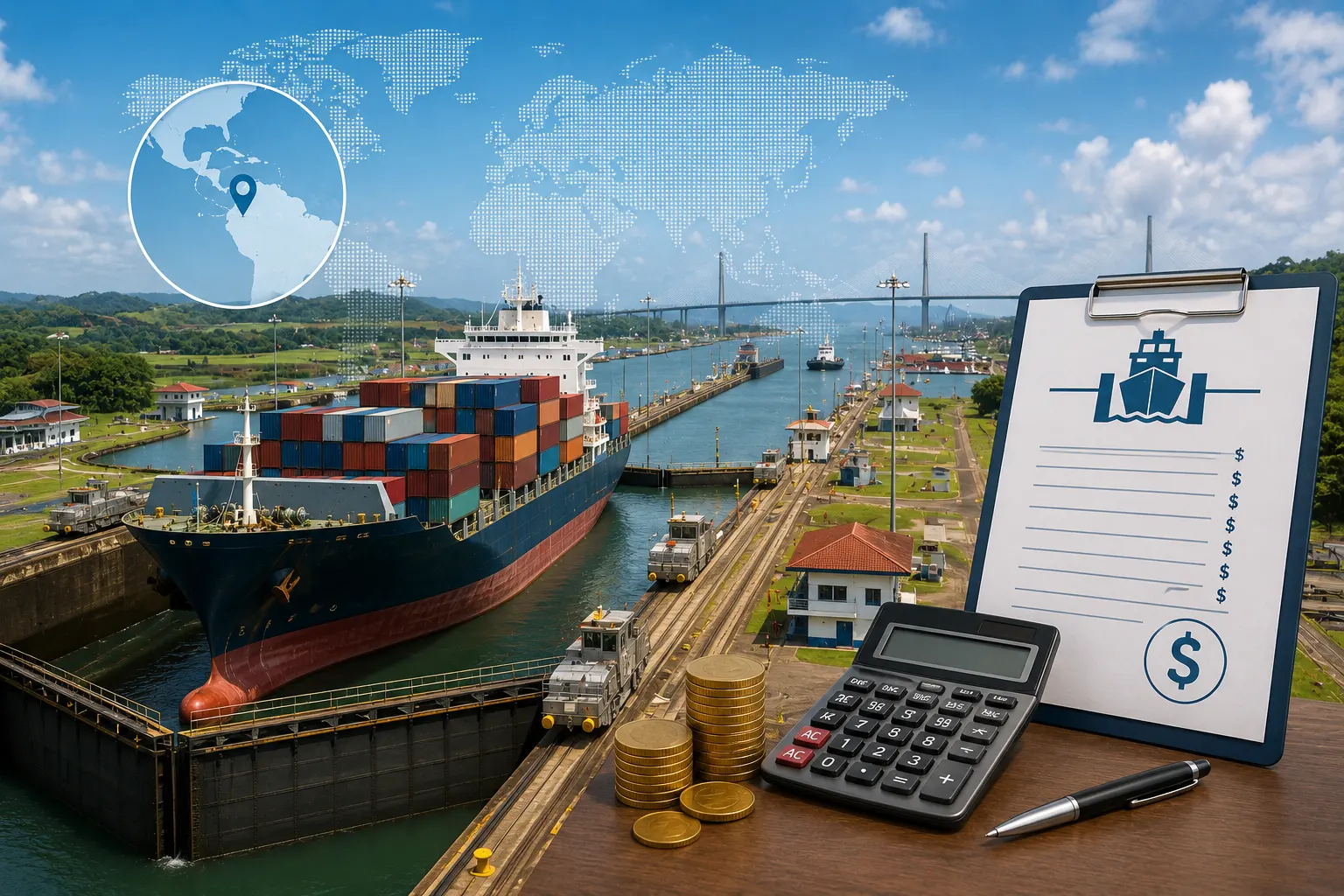
The Panama Transit Fee is the charge imposed by the Panama Canal Authority (ACP) on vessels that pass through the Panama Canal. It is one of the primary costs associated with using this vital international shipping route and is typically included in the ocean freight rates paid by shippers.
The fee helps cover the operation, maintenance, expansion, and modernization of the Panama Canal, one of the world's most important maritime trade corridors.
The Panama Canal provides a shortcut between the Atlantic Ocean and the Pacific Ocean, eliminating the need for ships to sail around Cape Horn at the southern tip of South America.
Transit fees are used to fund:
Canal operations
Lock maintenance
Waterway improvements
Infrastructure expansion
Navigation safety
Environmental protection
Without these fees, the Panama Canal could not maintain its capacity or accommodate larger vessels.
Unlike a flat toll, the Panama Transit Fee is based on several factors, including:
Vessel type (container ship, tanker, bulk carrier, LNG carrier, cruise ship, etc.)
Ship size (measured using Panama Canal Universal Measurement System—PC/UMS)
Cargo volume
Number of containers (TEUs)
Loaded vs. empty containers
Reservation status
Canal water conditions
Because of these variables, transit fees can vary significantly between vessels.
Transit fees vary widely depending on the vessel.
Approximate examples include:
| Vessel Type | Typical Transit Fee |
|---|---|
| Small yacht | $1,500–$5,000 |
| Small cargo vessel | $10,000–$50,000 |
| Container ship | $100,000–$500,000+ |
| Large Neo-Panamax container ship | $500,000–$1 million+ |
| LNG carrier | Can exceed $1 million |
These figures are estimates, and the actual amount depends on the vessel's characteristics and the Panama Canal's current tariff schedule.
The fee is paid by the shipping line or vessel operator to the Panama Canal Authority.
However, the cost is ultimately incorporated into:
Ocean freight rates
Freight surcharges
Shipping contracts
Logistics costs paid by importers and exporters
As a result, businesses shipping internationally indirectly contribute to the transit fee through their freight charges.
The Panama Transit Fee can influence:
Ocean freight pricing
Carrier operating costs
Shipping route selection
Seasonal freight surcharges
During periods of high demand, water shortages, or capacity restrictions, carriers may increase freight rates to offset higher canal-related expenses.
The Panama Canal is commonly used for shipments between:
China → U.S. East Coast
China → Gulf Coast (Houston, New Orleans)
Asia → Caribbean
Asia → East Coast of South America
Europe → U.S. West Coast
North America → South America
For example, many shipments from Shanghai to New York travel through the Panama Canal instead of sailing around South America.
These terms are related but not identical.
| Panama Transit Fee | Panama Canal Surcharge (PCS) |
|---|---|
| Paid by the shipping line to the Panama Canal Authority | Additional charge imposed by the carrier on customers |
| Official canal toll | Commercial surcharge included in freight rates |
| Based on vessel size and cargo | Varies by carrier and market conditions |
Importers often see the Panama Canal Surcharge (PCS) rather than the actual transit fee on their freight invoices.
Transit costs may rise due to:
Water conservation measures during droughts
Congestion at the canal
Priority booking or reservation fees
Larger vessel dimensions
Peak shipping seasons
Canal tariff adjustments
These factors can affect both transit times and overall shipping expenses.
Businesses can minimize the impact of Panama Canal costs by:
Planning shipments well in advance
Consolidating cargo into full container loads (FCL)
Comparing East Coast and West Coast routing options
Choosing flexible transit schedules during peak seasons
Working with an experienced freight forwarder to optimize routing and carrier selection
The Panama Transit Fee is the official toll charged to vessels for using the Panama Canal. Although shipping lines pay the fee directly, it ultimately becomes part of the total transportation cost borne by importers and exporters.
Understanding how the Panama Transit Fee affects freight pricing can help businesses make more informed routing decisions, manage landed costs, and improve international supply chain planning—especially for shipments moving between Asia and the Americas.
 2025 US-China Trade War: Latest Tariff Updates, Negotiation TrendsMay 7, 2025The US-China trade war remains a critical global issue in 2025, with escalating tariffs disrupting supply chains and impacting businesses worldwide. The United States, under President Donald Trump, ha...view
 Trump Tariff Overhaul Reshapes Global Logistics: Cross-Border E-commerce & Air Freight Face Seismic ShiftsNovember 13, 2023How evolving Sino-US trade policies impact courier China to UK services, air freight from China to UK routes, and global shipping costsview
 Import Taxes in AustraliaSeptember 27, 2023E-commerce becomes more and more popular around the world. The E-commerce has experienced significant growth in Australia recently as well. It will be a smart move expanding your business to reach you...view
 Shipping Medical Supplies from China: Compliance and Safety TipsJanuary 24, 2025Importing medical supplies from China to the USA can be a highly rewarding yet complex process. The demand for cost-effective, high-quality medical products has skyrocketed in recent years, making Chi...view
 English
  português
  Call us on:
  Email Us:
  International Mayors Exchange Center, No. 55 Shizhou Middle Rd, Nanshan District, Shenzhen Guangdong China
