

Enhanced U.S. West Coast Services
Priority Customs Clearance: Select logistics providers now offer expedited customs clearance for U.S.-bound shipments, including assistance with securing import bonds (required for U.S. customs compliance).
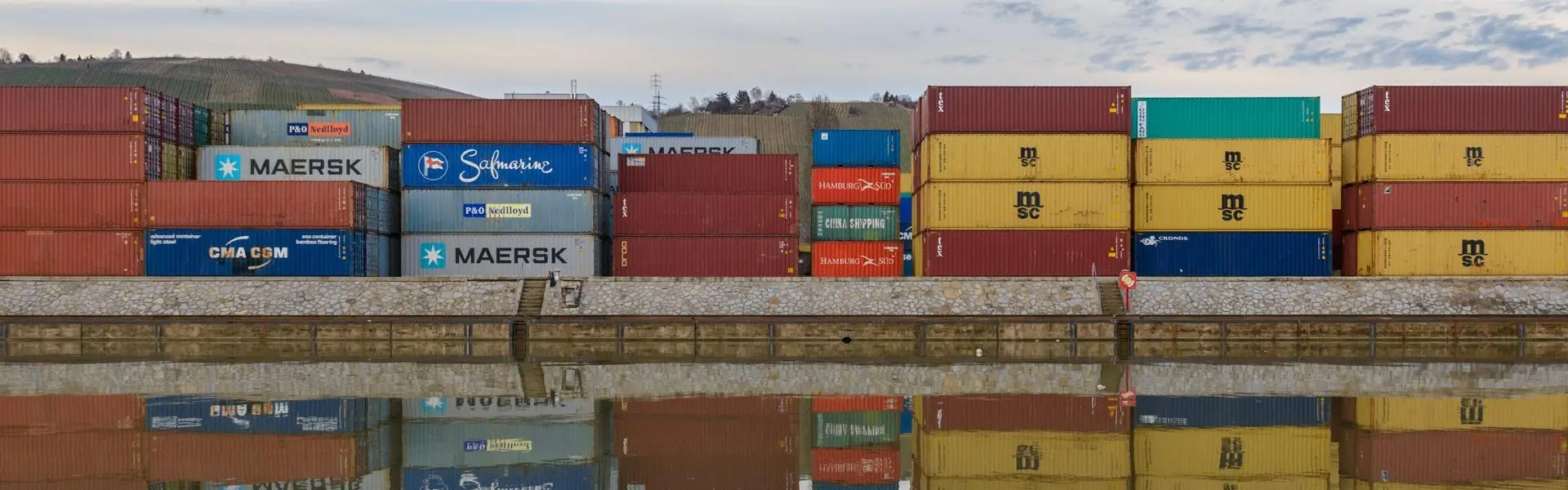
Capacity Allocation: Major ocean carriers are redirecting vessels to U.S. West Coast ports (e.g., Los Angeles) to avoid potential East Coast labor strikes and capitalize on shorter transit times. Los Angeles Port reported an 11.8% YoY increase in imported containers in February 2025.
Freight Rate Surges
U.S. West Coast Routes: Spot rates for 40ft containers (FEU) from China to the U.S. West Coast jumped 50% since late 2024, reaching $3,800–$4,300/FEU. Carriers plan additional $1,000–$3,000/FEU hikes in April 2025 ahead of tariff deadlines.
Air Cargo Shifts
E-commerce-Driven Demand: Airfreight rates from Asia-Pacific to North America rose to $5.10/kg (up 7% YoY) as sellers prioritize high-value goods (e.g., electronics) to offset tariff impacts.
Withdrawal from Low-Value Parcels
Tariff Deposits: 30% upfront deposits for duties.
Documentation Compliance: Full HS codes, origin certificates, and commercial invoices.
End of De Minimis Rule: Following the U.S. elimination of duty-free treatment for sub-$800 parcels (effective May 2025), logistics firms are phasing out direct-to-consumer small parcel services. Many now require:
Cost Shifts to Sellers
Small parcel handlers in China now impose additional fees (e.g., $3–$5/parcel for customs filings), raising costs by 20–30% for cross-border sellers.
Warehousing & Localization
U.S. Fulfillment Hubs: E-commerce sellers are expanding U.S.-based warehouses to bypass direct shipping tariffs. For example, one Shenzhen-based seller relocated 30,000 units to Los Angeles warehouses for local distribution.
Market Consolidation
Smaller freight forwarders face existential risks due to rising compliance costs, while large players leverage economies of scale to dominate U.S.-bound routes.
Price Volatility
Ocean Freight: Short-term rate spikes driven by pre-tariff stockpiling and capacity constraints.
Air Cargo: High-value goods dominate air shipments, squeezing out low-margin products (e.g., apparel).
Tariff Timelines:
34% China-Specific Tariffs: Effective April 9, 2025 (cumulative rate: 54% with existing duties).
Small Parcel Duties: $25/package from May 2025, rising to $50/package by June 2025.
Port Activity:
Los Angeles Port processed 801,000 TEUs in February 2025, with empty container returns up 13% MoM.
Partner with Compliant Carriers: Prioritize providers offering bonded services, U.S. customs expertise, and stable capacity.
Diversify Supply Chains: Explore alternative sourcing (e.g., Southeast Asia) and hybrid shipping models (air + ocean).
Monitor Policy Shifts: Prepare for retaliatory tariffs from the EU, Japan, and Brazil, which may further disrupt global trade.
Note: Tariff impacts remain fluid. Verify real-time rates and regulations with carriers or customs brokers before finalizing shipments.
_400x400.webp) What Is a Power of Attorney (POA)?June 26, 2026A Power of Attorney (POA) is a legal document that authorizes one person or organization (the agent or attorney-in-fact) to act on behalf of another person or company (the principal) in specific legal...view
What Is a Power of Attorney (POA)?June 26, 2026A Power of Attorney (POA) is a legal document that authorizes one person or organization (the agent or attorney-in-fact) to act on behalf of another person or company (the principal) in specific legal...view It is expected that the Port of Baltimore will resume full navigation before the end of MayApril 24, 2024According to CUC Freight, citing China News Agency, US President Biden came to Baltimore, Maryland inspect the recently collapsed Francis Scott Key Bridge. Biden said reopening the Port of Baltimore i...view
 Twenty-foot Equivalent Unit (TEU)July 2, 2025A Twenty-foot Equivalent Unit (TEU) is a standardized measurement used in the shipping and logistics industry to describe the capacity of container ships and terminals. One TEU represents the space ta...view
 What is a Container YardSeptember 1, 2025What Is a Container Yard (CY)?A Container Yard (CY) is a designated facility within a port, inland terminal, or logistics hub where shipping containers are stored, received, and delivered. It serves a...view
 English
  português
  Call us on:
  Email Us:
  International Mayors Exchange Center, No. 55 Shizhou Middle Rd, Nanshan District, Shenzhen Guangdong China
