


Full Truck Load (FTL) is a freight shipping service where an entire truck is reserved for a single customer’s cargo. Unlike Less-than-Truckload (LTL), where shipments from multiple shippers share the same truck, FTL dedicates the full vehicle to one shipper’s goods.
This mode is commonly used in road freight logistics for large, heavy, or time-sensitive shipments that require direct delivery.
Dedicated Truck
One customer’s cargo fills the truck, regardless of whether the space is fully utilized.
Faster Transit
Since the truck doesn’t stop for multiple pickups or drop-offs, transit times are usually shorter than LTL.
Better Security
Reduced handling lowers the risk of damage or loss—ideal for fragile or high-value goods.
Flexible Routing
The shipper can specify routes, schedules, and delivery preferences since the truck isn’t shared.
High Volume Cargo: Typically more than 10–12 pallets or 15,000+ pounds (6,800+ kg).
Oversized or Heavy Loads: Machinery, industrial equipment, or bulk shipments.
Urgent Deliveries: Direct, point-to-point transport is faster than LTL.
Sensitive or Fragile Goods: Fewer touchpoints reduce handling risk.
| Factor | FTL (Full Truck Load) | LTL (Less-than-Truckload) |
Truck Usage | Entire truck dedicated to one shipper | Shared among multiple shippers |
Transit Time | Faster, direct delivery | Slower, multiple stops involved |
Cost | Higher if cargo doesn’t fill the truck | Lower, but per-unit cost may be higher |
Cargo Safety | More secure, minimal handling | More handling, higher risk |
In global freight forwarding, FTL is often used for:
Port Drayage: Moving full containers (FCL) between seaports and inland warehouses.
Cross-Border Transport: For example, trucking between China and neighboring countries or within the EU.
Distribution Hubs: Delivering consolidated cargo from warehouses to final buyers.
FTL is the best choice when you have a large shipment, require speed, or need full control and security over your cargo. While it comes at a higher cost compared to LTL, the efficiency and reduced risk often justify the investment.
 Understanding General Rate Increases (GRIs) in ShippingMay 30, 2025What is a General Rate Increase (GRI)?A General Rate Increase (GRI) refers to the adjustment of base ocean freight rates by carriers, typically implemented during periods of high demand or operational...view
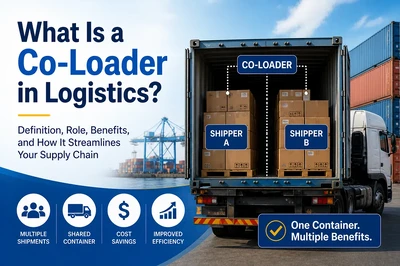 What Is a Co-Loader in Logistics?May 6, 2026A co-loader is a logistics company or freight intermediary that consolidates cargo from multiple freight forwarders and books transportation space with carriers on their behalf.In international shippi...view
 Top 10 Chinese Wholesale Sports Jerseys Sites 2025 — With Logistics Advice for ImportersMay 30, 2025The Growing Demand for Sports Jerseys
Sports jerseys have transcended their traditional role as athletic wear to become fashion statements and symbols of team loyalty. With the global sports industry ...view
Top 10 Chinese Wholesale Sports Jerseys Sites 2025 — With Logistics Advice for ImportersMay 30, 2025The Growing Demand for Sports Jerseys
Sports jerseys have transcended their traditional role as athletic wear to become fashion statements and symbols of team loyalty. With the global sports industry ...view CUC Freight Insight Report: Turning 2025 U.S. Tariffs into Opportunities for Cross-Border GrowthMay 12, 2025Discover how POP mode and CUC Freight's air logistics solutions, ocean container shipping, and cargo agent expertise help businesses navigate 2025 U.S. tariffs. Optimize costs with freight discount offers today!view
 English
  português
  Call us on:
  Email Us:
  International Mayors Exchange Center, No. 55 Shizhou Middle Rd, Nanshan District, Shenzhen Guangdong China
