


A freight hauler is a company or individual responsible for transporting goods from one location to another using commercial vehicles such as trucks, trains, ships, or aircraft. In simple terms, a freight hauler is the entity that physically moves cargo within a domestic or international supply chain.
Freight haulers are a core component of logistics operations—especially for importers shipping goods from China to global markets—because they ensure that cargo moves safely, efficiently, and on time.
A freight hauler’s responsibilities include:
Picking up cargo from the manufacturer, warehouse, or port
Transporting goods via road, rail, sea, or air
Delivering shipments to distributors, customers, or inland terminals
Ensuring cargo safety during transit
Meeting regulatory and safety requirements (weight limits, hazardous materials rules, permits)
Truck Haulers (Road Freight)
Most common haulers for inland transport
Includes FTL, LTL, drayage trucks, and long-haul trucking companies
Rail Haulers (Rail Freight Operators)
Move heavy or bulk cargo over long distances
Common in intermodal transport in the U.S. and Europe
Air Freight Haulers
Airlines or cargo aircraft operators
Used for high-value or time-sensitive shipments
Ocean Freight Haulers (Carriers)
Shipping lines operating container vessels
Handle international movement between ports
Many importers confuse these two roles:
| Freight Hauler | Freight Forwarder |
Physically moves the cargo | Plans the shipment and arranges carriers |
Operates trucks, trains, planes, or ships | Offers routing, documentation, customs, and end-to-end logistics |
Limited administrative services | Manages the entire supply chain process |
A freight hauler is the transport operator, while a freight forwarder is the logistics coordinator.
When importing from China:
Drayage haulers move containers from factories to ports
Shipping lines (e.g., COSCO, Maersk) haul containers across oceans
Trucking or rail haulers deliver goods from destination ports to final warehouses
Freight haulers form the backbone of door-to-door shipping solutions.
Transit time reliability
Availability of equipment (containers, trucks, chassis)
Safety and compliance records
Insurance coverage
Peak season capacity constraints
Most businesses rely on freight forwarders to select and coordinate the best haulers for each shipment leg.
A freight hauler is the transport operator responsible for physically moving goods within the supply chain. Whether by truck, rail, air, or sea, freight haulers are essential for ensuring shipments move safely and efficiently from origin to destination.
For importers shipping from China, understanding the role of freight haulers helps optimize costs, reduce delays, and improve logistics planning.
 What Is a Customs Entry?October 30, 2025A customs entry is the official declaration submitted to a country’s customs authority when goods are imported or exported. It provides detailed information about the shipment, including its value, o...view
 What Are Warehousing Services?October 30, 2025Warehousing services refer to the storage, management, and handling of goods in a designated facility before they are distributed or shipped to their final destination. These services are a crucial pa...view
 Drought-Hit Panama Canal to Restrict Access for One Year?August 31, 2023Ilya Espino, deputy director of the Panama Canal Authority, said that if the area where the canal body of water is located does not receive enough rain in the next few months, the ship restrictions on...view
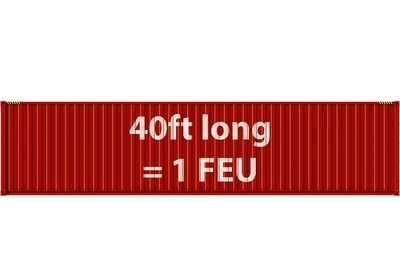 Forty-foot Equivalent Unit (FEU)July 2, 2025What Is a Forty-foot Equivalent Unit (FEU)?A Forty-foot Equivalent Unit (FEU) is a standard measure in container shipping that represents the size of a 40-foot shipping container. It’s commonly used ...view
 English
  português
  Call us on:
  Email Us:
  International Mayors Exchange Center, No. 55 Shizhou Middle Rd, Nanshan District, Shenzhen Guangdong China
