


The Automated Manifest System (AMS) is an electronic information transmission system managed by the U.S. Customs and Border Protection (CBP). It was created to speed up cargo processing and improve security for goods arriving in the United States.
AMS requires carriers, freight forwarders, and other logistics providers to submit detailed cargo information before the goods reach a U.S. port of entry.

Security & Risk Management
Provides CBP with advance information on shipments to identify high-risk cargo.
Enhances compliance with anti-terrorism and anti-smuggling initiatives.
Faster Customs Clearance
Pre-submission of data allows CBP to review shipments before arrival.
Reduces delays at ports and speeds up cargo release.
Trade Facilitation
Encourages automation and reduces paperwork for carriers and importers.
Carriers (ocean, air, rail, or truck operators) submit cargo manifests electronically before arrival.
Freight Forwarders can also file House Bills of Lading (HBLs) under AMS when consolidating shipments.
The system cross-checks cargo details with Importer Security Filing (ISF / 10+2) for ocean freight.
CBP reviews and either approves, flags, or holds shipments for further inspection.
Shipper and consignee details
Bill of lading or air waybill numbers
Cargo description & HS codes
Container numbers (for sea freight)
Port of loading and destination
Air AMS: Airlines must submit data at least 4 hours prior to arrival in the U.S.
Ocean AMS: Must be filed 24 hours before loading at the foreign port.
Rail & Truck AMS: Applies to shipments crossing land borders.
Fines or penalties issued by CBP
Cargo holds and delays at ports
Higher inspection rates for repeat offenders
Ensures compliance with U.S. customs regulations.
Minimizes supply chain disruptions by reducing clearance delays.
Plays a crucial role in security screening and protecting trade lanes.
In short: The Automated Manifest System (AMS) is a U.S. customs electronic system that requires carriers and forwarders to file cargo details before shipment arrival, ensuring faster clearance and better security.
 Importing From China: Tariffs, Duties, and Taxes ExplainedMay 16, 2025Importing goods from China can be a lucrative business, but it comes with its own set of challenges, including navigating tariffs, duties, and taxes. Understanding these costs is crucial for accuratel...view
 Shipping from China to EgyptJuly 1, 2025Shipping goods from China to Egypt is a well-established trade lane critical for businesses across North Africa and the Middle East. With growing demand for Chinese electronics, machinery, textiles, a...view
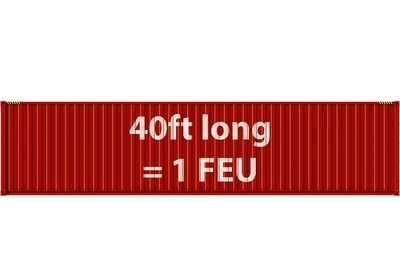 Forty-foot Equivalent Unit (FEU)July 2, 2025What Is a Forty-foot Equivalent Unit (FEU)?A Forty-foot Equivalent Unit (FEU) is a standard measure in container shipping that represents the size of a 40-foot shipping container. It’s commonly used ...view
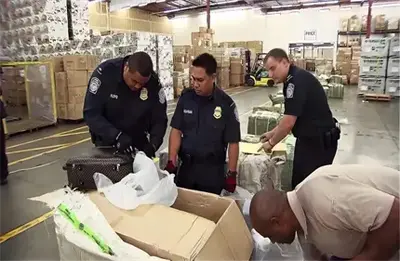 Shipping warning! U.S. Customs strictly inspects these goods, making these goods the hardest hit areaApril 27, 2024Since April, the U.S. customs inspection rate has surged. This change has aroused deep concern among international traders.What causes the customs inspection rate to soar? It is understood that the im...view
 English
  português
  Call us on:
  Email Us:
  International Mayors Exchange Center, No. 55 Shizhou Middle Rd, Nanshan District, Shenzhen Guangdong China
