


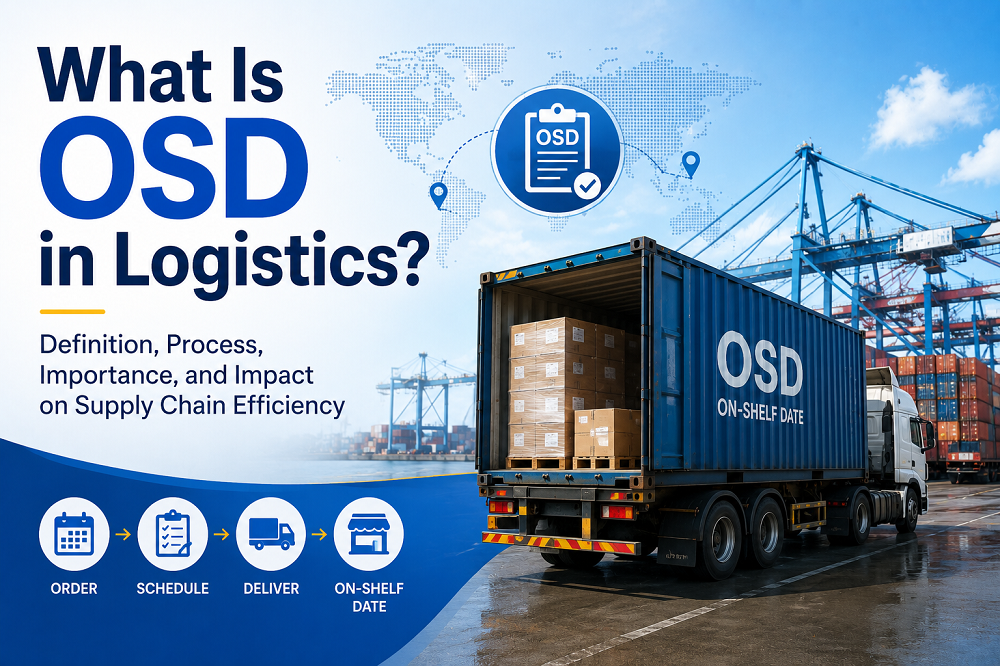
OSD stands for Over, Short, and Damaged. It is a common logistics and freight transportation term used to describe problems identified when cargo is delivered and inspected by the consignee.
An OSD issue occurs when:
The shipment quantity is greater than expected (Over)
The shipment quantity is less than expected (Short)
The cargo arrives with visible or concealed damage (Damaged)
OSD reports are widely used in:
Ocean freight
Air freight
Trucking
Warehousing
LTL shipping
Distribution and supply chain management
For importers, exporters, and freight forwarders, proper OSD handling is important for claims processing, inventory accuracy, and cargo responsibility verification.
“Over” means the receiver obtains more cargo than listed on the shipping documents.
Examples include:
Extra cartons delivered
Additional pallets received
Incorrect shipment quantities
Duplicate cargo loaded by mistake
This may happen due to:
Warehouse loading errors
Documentation mistakes
Incorrect inventory handling
“Short” means part of the shipment is missing upon delivery.
Examples include:
Missing cartons
Missing pallets
Partial shipment loss
Incorrect cargo count
Common causes include:
Cargo misrouting
Theft
Loading errors
Warehouse scanning issues
Port or terminal handling mistakes
Short shipments are one of the most common freight claim situations in international logistics.
“Damaged” refers to cargo arriving in poor condition.
Examples include:
Broken packaging
Wet cartons
Crushed pallets
Product scratches
Water damage
Handling damage during transit
Damage may occur during:
Container loading
Port handling
Truck transportation
Warehousing
Last-mile delivery
An OSD report serves as official evidence that a shipment issue occurred during transportation or delivery.
It helps:
Support freight claims
Identify responsibility
Document cargo condition
Reduce disputes between parties
Improve supply chain accountability
Without proper OSD documentation, it may be difficult to recover compensation from:
Carriers
Insurance companies
Freight forwarders
Warehouses
OSD issues should be reported immediately after cargo inspection at delivery.
Best practices include:
Inspect cargo before signing delivery receipts
Count all packages carefully
Take photos of damaged cargo
Note shortages or damage on the delivery receipt
Notify the carrier promptly
Delays in reporting may weaken freight claims.
A typical OSD report may include:
Shipment number
Bill of lading number
Delivery date
Cargo description
Quantity discrepancy
Damage details
Photos of damaged goods
Receiver comments
Driver acknowledgment
Accurate documentation is essential for claim processing.
Several factors may lead to OSD situations:
Improper packaging
Rough cargo handling
Incorrect labeling
Loading mistakes
Customs inspections
Cargo shifting inside containers
Warehouse management errors
Transportation accidents
Using professional packaging and experienced logistics providers can help reduce OSD risks.
Companies can minimize OSD incidents by:
Using strong export packaging
Applying clear shipping labels
Conducting loading inspections
Using cargo securing methods
Verifying shipment counts before dispatch
Purchasing cargo insurance
Working with reliable freight forwarders
Preventive logistics management significantly reduces cargo disputes and financial losses.
OSD stands for Over, Short, and Damaged.
The consignee, warehouse staff, carrier representative, or receiving department usually prepares the report during cargo inspection.
Yes. OSD documentation is often required for freight damage or cargo shortage claims.
Take photos immediately, record the damage on the delivery receipt, and notify the carrier or freight forwarder as soon as possible.
Yes. OSD issues are relatively common in LTL and multi-handling freight environments because cargo passes through multiple terminals.
Yes. Concealed damage discovered after unpacking can still be reported, although claim timelines may be stricter.
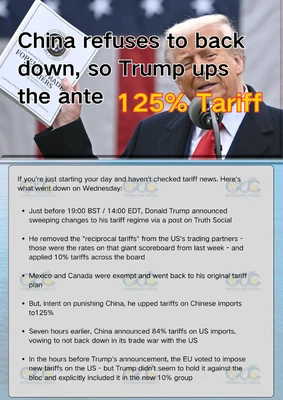 China maintains defiant stance as Trump administration escalates trade tensions with sweeping 125% tariffsApril 10, 2025Seven hours earlier, China announced 84% tariffs on US imports, vowing to not back down in its trade war with the USview
 What is FCL Shipping? A Complete GuideApril 21, 2024Introduction to FCL ShippingIn the realm of international trade, FCL shipping stands as a pillar supporting the seamless movement of goods across borders. FCL, or Full Container Load, is a shipping me...view
 Importing From China: Tariffs, Duties, and Taxes ExplainedMay 16, 2025Importing goods from China can be a lucrative business, but it comes with its own set of challenges, including navigating tariffs, duties, and taxes. Understanding these costs is crucial for accuratel...view
 Shipping Cargoes By Ocean, Air, Or Multimodal Transport?June 27, 2023In today's globalized world, shipping cargoes across international borders has become essential for businesses of all sizes, and it requires a reliable and cost-effective transportation solution. ...view
 English
  português
  Call us on:
  Email Us:
  International Mayors Exchange Center, No. 55 Shizhou Middle Rd, Nanshan District, Shenzhen Guangdong China
