


Contract carriage is a transportation arrangement in which a carrier provides freight services to a specific shipper (or a limited group of shippers) based on a formal contract that outlines service terms, rates, responsibilities, and delivery expectations.
Unlike common carriers—which must serve the general public—contract carriers operate under exclusive or semi-exclusive agreements, offering customized freight services tailored to the needs of the contracting party.
Exclusive or Semi-Exclusive Service
The carrier serves only the shipper(s) named in the contract.
Provides more predictable capacity and higher service reliability.
Negotiated Rates & Terms
Pricing, transit time guarantees, equipment type, and service levels are negotiated in advance.
Customized Solutions
Options for dedicated trucks, drivers, schedules, and routes.
Ideal for businesses with consistent or specialized shipping needs.
Regulated but Less Stringent Than Common Carriage
Still follows transportation regulations but with more contracting freedom.
A shipper signs a written agreement with a carrier specifying:
Freight rates
Pick-up/delivery schedules
Equipment requirements (e.g., refrigerated trucks, flatbeds)
Liability and insurance terms
Minimum volume commitments
Performance standards
Once the contract is in place, the carrier dedicates resources (vehicles, drivers, capacity) to fulfill that agreement.
| Contract Carriage | Common Carriage |
Serves specific clients under contract | Serves the general public |
Customized service | Standard service |
Negotiated rates | Published tariff rates |
More reliable capacity | First-come, first-served |
Long-term partnership | Transactional relationship |
In international logistics, contract carriage is valued for predictability and capacity assurance, especially during peak season.
A fashion retailer contracting dedicated trucks to move garments from Italian factories to distribution centers.
A U.S. importer booking long-term container transport from China with guaranteed space allocations.
Automotive companies using dedicated carriers for just-in-time (JIT) delivery.
Guaranteed Capacity
Helps avoid shortages during peak shipping seasons (e.g., pre–Chinese New Year).
Cost Stability
Long-term contracts protect against rate volatility in trucking or ocean freight markets.
Service Consistency
Dedicated carriers deliver faster and with fewer delays.
Better Control Over Logistics
Customized routing, scheduling, and equipment tailored to business requirements.
May require minimum volume commitments
Less flexibility if shipment volumes drop
Contracts must clearly define responsibilities to avoid disputes
Not always ideal for infrequent or low-volume shippers
Contract carriage is a customized, long-term freight arrangement between a shipper and a carrier that provides dedicated, reliable, and efficient transportation services. It's especially valuable for businesses with consistent shipping needs, strict delivery timelines, or specialized cargo requirements.
 What Is an Inspection Certificate?October 30, 2025An Inspection Certificate is an official document issued by an independent inspection agency, quality control company, or sometimes a government authority, confirming that goods have been inspected an...view
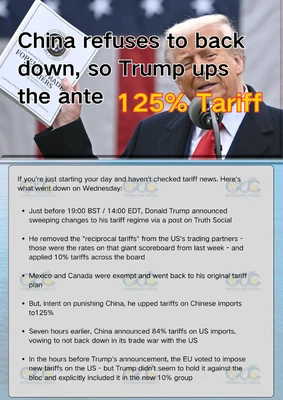 China maintains defiant stance as Trump administration escalates trade tensions with sweeping 125% tariffsApril 10, 2025Seven hours earlier, China announced 84% tariffs on US imports, vowing to not back down in its trade war with the USview
 Mastering the Supply Chain: Streamlining the Process of Shipping Goods from China to CanadaMarch 13, 2024In today's globalized economy, the supply chain has become a crucial link connecting economies worldwide. With China being a major manufacturing hub, trade relations with Canada are becoming incre...view
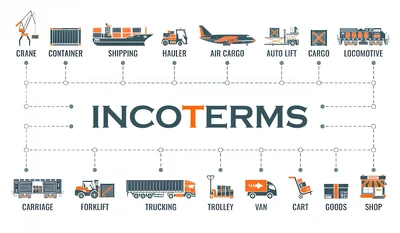 What are Incoterms®?October 12, 2023The Incoterms is an abbreviation for “International Commercial Terms.” This term represents a very useful way of communication and it’s actually aimed at reducing confusion between buyers and selle...view
 English
  português
  Call us on:
  Email Us:
  International Mayors Exchange Center, No. 55 Shizhou Middle Rd, Nanshan District, Shenzhen Guangdong China
