



If you're sourcing sports jerseys in bulk from China in 2025, these are the Top 10 Chinese wholesale sites used by global buyers:
Alibaba
DHgate
1688.com
Made-in-China
Global Sources
YiwuGo
Chinabrands
AliExpress (bulk orders via contact)
Baileysports.cn
Kissrain.cn
Each platform connects you to hundreds of manufacturers or trading companies that specialize in custom teamwear, replica jerseys, blank sportswear, and private label apparel. However, selecting a supplier is only part of the equation—shipping jerseys across borders efficiently and compliantly is often the greater challenge.
This article highlights logistics implications, industry-specific risks, and best practices for global companies importing sports jerseys from China.
Global B2B giant with thousands of verified sportswear suppliers.
Ideal for large MOQ, customized jersey designs, and OEM manufacturing.
Most manufacturers located in Fujian, Guangdong, and Zhejiang.
Better suited for smaller wholesale orders or faster sourcing.
Popular with online sellers, team managers, and promotional distributors.
Domestic Chinese platform with ultra-competitive pricing.
Requires a local agent or fluent Chinese for sourcing.
Most vendors are not export-ready—logistics support is essential.
Business-friendly platform with factory focus.
Many suppliers already familiar with export documentation and certifications.
Known for higher-end manufacturers and trade show exposure.
Often used by overseas brand owners and sports clubs.
Online interface for Yiwu's massive wholesale market.
Features sportswear, blank jerseys, and low-cost alternatives.
Often used for reselling in Africa, the Middle East, and South Asia.
Integrated with dropshipping and wholesale models.
Lower MOQ options, but limited customization compared to factory-direct platforms.
Not a traditional wholesale site, but many suppliers offer B2B pricing on request.
Good for quick reorders or smaller niche batches.
Dedicated Chinese manufacturer focused on team jerseys.
Website requires basic Chinese; often supports export with prior experience.
Produces sublimation sportswear and personalized jerseys.
OEM/ODM capable, used by semi-pro clubs and local distributors.
Jerseys typically fall under HS Code 6109 (T-shirts) or 6110 (sweaters/sweatshirts) depending on fabric and construction. Misclassification leads to:
Incorrect duty calculation
Customs holds or fines
Rejected entries
Best practice: Confirm final product specs with supplier and get your freight partner to verify HS codes.
If you're importing jerseys featuring logos from:
NBA, NFL, FIFA, MLB
Popular players' names
Official team crests
Ensure you hold proper licenses. Otherwise, your shipment may be seized by customs under anti-counterfeiting laws—especially in the U.S., UK, and EU.
Logistics tip: Ask for a copy of the authorization letter from suppliers and avoid using brand keywords in shipping documents unless licensed.
| Volume & Order Type | Recommended Method | Estimated Transit Time |
< 100 kg (urgent) | Express (DHL, FedEx) | 3–6 days |
100–500 kg (moderate size) | Air freight | 7–10 days |
500–3,000 kg | LCL sea freight | 18–28 days |
> 3,000 kg or containerized | FCL (20GP/40HQ containers) | 18–35 days |
Jerseys are low weight but high volume, which means freight is often charged by dimensional weight. Consolidated sea shipments are ideal if you're working with multiple factories.
Many jersey importers buy from multiple factories (e.g., one for printing, one for blank jerseys, another for shorts). Instead of managing fragmented shipping:
Use a consolidation warehouse in China
Combine all goods into a single export
Cut shipping costs and simplify customs declarations
Insider advice: Ensure all supplier invoices are consistent and include proper SKU, HS Code, and declared value alignment.
Apparel shipments must include:
"Made in China" marking (visible on product or packaging)
Fabric composition (e.g., 100% polyester)
Washing instructions
Size labels (especially for U.S./EU retail markets)
Missing or incorrect labeling can result in import rejection, especially in U.S. CBP and EU customs inspections.
Major peak seasons for jersey logistics include:
March–May (school/club uniforms for spring leagues)
June–August (football and basketball camps)
September–October (back-to-school retail)
November–December (holiday/fan merchandise)
Plan bookings 30+ days in advance during these peak months, especially if using sea freight. Don’t forget to account for:
Chinese New Year shutdown (Jan–Feb)
Golden Week (October 1–7)
| Incoterm | Responsibility for Logistics | Best For |
EXW | Buyer | Buyers using multiple suppliers |
FOB | Supplier (to port only) | Balanced risk |
DDP | Seller/freight forwarder | Amazon FBA or e-commerce orders |
In 2025, DDP is trending among e-commerce brands to simplify customs and taxation, especially when shipping to North America and Europe.
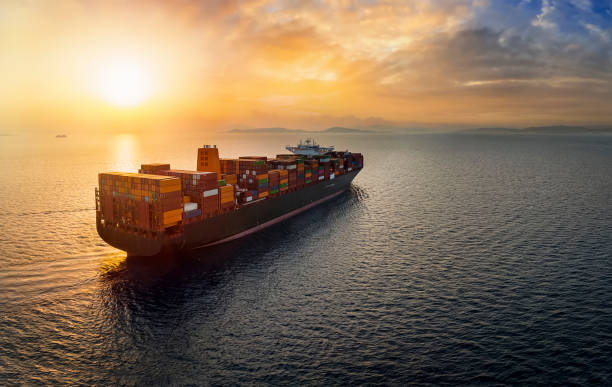
If you're sending inventory to Amazon warehouses, logistics must follow strict FBA standards:
Outer carton labels with FNSKU and shipping info
Individual product barcodes
Palletization (if required)
Failure to comply may result in inventory rejection or costly relabeling fees.
Sports jerseys take up volume but weigh little. Use:
Vacuum compression (if acceptable to your buyer)
Carton size standardization
Lightweight labeling materials
These reduce volumetric weight and air freight charges significantly.
The Chinese wholesale sports jersey market is thriving in 2025, offering vast opportunities for distributors, club managers, and online sellers. However, logistics china remains a critical component in profitability and scalability.
Sourcing from these top 10 platforms is only the first step. To succeed, importers must:
Understand apparel-specific logistics risks
Prepare for IP and compliance regulations
Choose the right freight strategy for volume, speed, and customs
Working with a freight partner experienced in textile and apparel supply chains—especially in navigating dimensional freight, labeling standards, and multi-supplier consolidation—ensures smooth delivery and sustainable growth.
 Mastering the Supply Chain: Streamlining the Process of Shipping Goods from China to CanadaMarch 13, 2024In today's globalized economy, the supply chain has become a crucial link connecting economies worldwide. With China being a major manufacturing hub, trade relations with Canada are becoming incre...view
 LTL vs FTL Freight: Understanding the DifferencesMay 10, 2024In the world of freight transportation, two terms that often come up are LTL (Less Than Truckload) and FTL (Full Truckload) freight. Understanding the nuances between these two modes of shipping is cr...view
 Shipping LCL vs FCL: Making the Right Choice for Your CargoApril 20, 2024Introduction to LCL and FCL ShippingIn the realm of international freight transport, two terms often emerge: LCL and FCL. Understanding the nuances between them can significantly impact your logistics...view
 How to find a reliable Freight Forwarder For Shipping From China To The USANovember 13, 2023Are you struggling to choose a reliable freight forwarder for your cargo from China to USA? It may result in delays, high shipping extra costs, or even lost shipments if you chose a wrong freight for...view
 English
  português
  Call us on:
  Email Us:
  International Mayors Exchange Center, No. 55 Shizhou Middle Rd, Nanshan District, Shenzhen Guangdong China
