


Warehousing services refer to the storage, management, and handling of goods in a designated facility before they are distributed or shipped to their final destination. These services are a crucial part of the supply chain and logistics process, ensuring that products are stored efficiently, safely, and in compliance with regulations.
For importers, exporters, and logistics companies, warehousing acts as the bridge between manufacturing and distribution, allowing flexibility, faster delivery, and optimized inventory control.
Storage of Goods
Safe and organized storage of raw materials, finished goods, or intermediate products.
Temperature-controlled or specialized storage for sensitive items (e.g., pharmaceuticals, food, electronics).
Inventory Management
Real-time tracking of stock levels using warehouse management systems (WMS).
Barcode and RFID systems for precise control over inbound and outbound inventory.
Order Fulfillment
Picking, packing, and labeling orders for shipment.
Integration with eCommerce platforms for automated order processing.
Cross-Docking
Goods are transferred directly from inbound trucks to outbound ones, minimizing storage time and speeding up delivery.
Consolidation and Deconsolidation
Combining smaller shipments from multiple suppliers (consolidation) or breaking down bulk shipments for distribution (deconsolidation).
Value-Added Services (VAS)
Kitting, repackaging, labeling, and light assembly to prepare goods for retail or final delivery.
| Type | Description |
Public Warehouse | Open to multiple clients, typically short-term use. |
Private Warehouse | Owned or leased by one company for exclusive use. |
Bonded Warehouse | Approved by customs; stores imported goods before duties/taxes are paid. |
Distribution Center | Focused on fast movement and order fulfillment rather than long-term storage. |
Climate-Controlled Warehouse | Maintains temperature and humidity for perishable or delicate goods. |
Improved Supply Chain Efficiency – Ensures goods are positioned closer to customers or ports.
Risk Management – Reduces losses from damage, theft, or stockouts.
Regulatory Compliance – Bonded warehouses allow deferred payment of import duties until goods are sold.
Cost Optimization – Enables bulk purchasing, storage, and flexible distribution scheduling.
In international trade, especially for shipments from China, warehousing plays a critical role in export logistics:
Pre-shipment consolidation in Chinese warehouses before export.
Bonded warehousing near ports like Shanghai, Shenzhen, or Ningbo to defer taxes until re-export.
Overseas warehousing in destination countries for faster last-mile delivery and reduced customs delays.
Warehousing services go far beyond just storage — they are an integral part of a well-optimized logistics strategy. For importers sourcing from China or exporters managing international trade, choosing the right warehousing solution can reduce costs, improve delivery times, and ensure better supply chain control.
 Navigating Global Trade: How to Choose the Right International Courier Service ProviderSeptember 26, 2023In the age of globalization, businesses of all sizes have access to international markets, and global trade is more accessible than ever before. To succeed in this dynamic landscape, choosing the righ...view
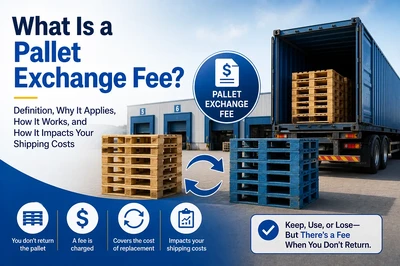 What Is a Pallet Exchange Fee?May 6, 2026A Pallet Exchange Fee is a logistics charge applied when shipping pallets are not returned, exchanged, or transferred according to an agreed pallet exchange program between shippers, carriers, warehou...view
 Canada Post Strike 2025: CUPW Issues 72-Hour NoticeMay 21, 2025May 21, 2025 – The Canadian Union of Postal Workers (CUPW) has issued a 72-hour strike notice to Canada Post, signaling a potential labor disruption as early as midnight on Friday, May 23, 2025. This...view
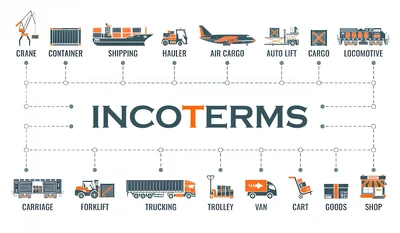 What are Incoterms®?October 12, 2023The Incoterms is an abbreviation for “International Commercial Terms.” This term represents a very useful way of communication and it’s actually aimed at reducing confusion between buyers and selle...view
 English
  português
  Call us on:
  Email Us:
  International Mayors Exchange Center, No. 55 Shizhou Middle Rd, Nanshan District, Shenzhen Guangdong China
