


For importers engaged in Shipping From China To USA, 2026 is not business as usual. The most important reality is this: Section 301 tariffs are still in place, the de minimis loophole for China-origin goods is effectively gone, and landed costs now require more careful planning than ever before.
For many U.S. importers, especially Amazon sellers, wholesalers, industrial buyers, and SMEs sourcing from China, the biggest challenge is no longer simply finding a supplier—it is understanding the true import cost after tariffs, customs entry requirements, and logistics changes.
If your business imports products from China, the difference between a profitable shipment and a costly mistake in 2026 often comes down to how well you understand tariff stacking, shipping methods, and customs compliance.
Compared with previous years, three major developments are shaping imports from China in 2026:
| Area | Before | 2026 Reality |
Section 301 Tariffs | Additional tariffs on many China-origin products | Still active on many HTS categories |
De Minimis ($800 Rule) | Small parcels under $800 often entered duty-free | No longer available for China-origin goods |
Customs Clearance | Informal entry possible for many shipments | More formal customs filings required |
This means importers can no longer rely on low-value parcel strategies to minimize customs costs. Businesses involved in Shipping From China To USA now need a more structured logistics and customs plan.
Section 301 tariffs are additional duties imposed by the United States on Chinese imports under the Trade Act of 1974. They were initially introduced in 2018 and continue to affect thousands of Chinese-origin products in 2026. Rates generally remain between 7.5% and 25%, while some strategic sectors face substantially higher duties.
The tariffs are applied in addition to standard U.S. import duties, meaning businesses may face multiple layers of import costs.
Many importers misunderstand how tariffs work. A common mistake is assuming the tariff replaces normal duty.
In reality, tariffs are often cumulative.
For example:
Product value: $20,000
Regular customs duty: 5%
Section 301 tariff: 25%
Potential landed duty cost:
Base customs duty: $1,000
Section 301 tariff: $5,000
Total tariff exposure: $6,000
This is why product classification and HTS code accuracy matter more than ever.
Although product lists change through periodic reviews and exclusions, commonly affected sectors include:
Industrial machinery and components
Consumer electronics
Furniture and home products
Automotive parts
Batteries and electrical products
Metal products and manufacturing materials
Some sectors experienced targeted tariff increases after the USTR four-year review, while limited product exclusions remain available for certain categories through 2026.
Not universally.
For most product categories, the core Section 301 structure remains intact. However, selected strategic industries—including clean energy, batteries, and certain technology products—have seen higher tariff pressure or expanded enforcement since the USTR review. Some exclusions have been extended into 2026 for qualifying products.
For importers, the key takeaway is:
Do not assume your 2024 or 2025 tariff exposure remains unchanged.
A product that previously carried a lower duty burden may now face a higher total landed cost depending on classification and sourcing strategy.
This is arguably the biggest change for smaller importers.
Previously, under the de minimis rule (Section 321), many shipments valued below $800 could enter the United States without formal customs entry or duty payment.
That model changed dramatically for Chinese-origin products.
Beginning in 2025 and continuing into 2026, Chinese-origin shipments no longer benefit from duty-free de minimis treatment in the same way they previously did. Even low-value parcels can now require customs filing, tariff payment, and additional documentation.
In previous years, some businesses relied on:
Splitting shipments into smaller parcels
Direct-to-consumer fulfillment from China
Small-batch test orders below $800
In 2026, those strategies are significantly less cost-effective.
Importers now face:
Customs broker fees
Formal customs filing requirements
HTS classification obligations
Additional tariff payments
For many businesses, bulk freight shipping has become more economical than repeated small parcel shipments.
The right shipping model now depends heavily on shipment size, order frequency, and tariff exposure.
Best for:
Urgent replenishment
High-margin products
Samples and prototypes
Pros
Fast transit time
Lower inventory holding costs
Better for time-sensitive products
Cons
Higher freight cost
Tariffs still apply
Less cost-efficient for bulky cargo
Best for:
Bulk inventory
Amazon FBA shipments
Industrial and B2B cargo
Pros
Lowest cost per unit
Better tariff cost absorption
Ideal for predictable replenishment
Cons
Longer transit time
Higher planning requirements
For most established importers, sea freight remains the most cost-effective method for Shipping From China To USA in 2026.
Many importers are moving toward a bulk import model:
Ship inventory in larger batches
Complete customs clearance once
Store goods in U.S. warehouses
Fulfill domestically
This reduces repeated customs costs and often lowers overall landed cost.
Too many buyers still focus only on supplier price.
The smarter approach is evaluating total landed cost.
Your actual import cost includes:
Factory Cost
Freight Charges
Customs Duty
Section 301 Tariffs
Broker Fees
Port Charges
Domestic Delivery
| Cost Category | Example Amount |
Product Cost | $15,000 |
Ocean Freight | $2,500 |
Customs Duty | $750 |
Section 301 Tariff | $3,750 |
Customs Brokerage | $250 |
Final Delivery | $600 |
Total Landed Cost | $22,850 |
This is why experienced importers rarely choose suppliers based on factory pricing alone.
Sometimes a supplier with slightly higher pricing but lower tariff exposure can produce a better final margin.
Yes—but only through compliant strategies.
Incorrect tariff classification can result in:
Overpayment of duties
Customs penalties
Shipment delays
Working with a customs broker or freight forwarder is often worthwhile for complex product categories.
Some Section 301 exclusions continue for limited products.
Before shipping, verify whether your product category qualifies.
Instead of repeated small parcel imports, many businesses now consolidate cargo into fewer shipments.
This approach can reduce:
Per-unit freight cost
Brokerage fees
Customs handling costs
Some companies are partially shifting sourcing to:
Vietnam, Mexico, or India
However, moving production purely for tariff reasons is not always practical.
Factors like supplier maturity, quality consistency, tooling costs, and lead time often outweigh tariff savings.
For many industrial and specialized products, China still remains the most efficient sourcing base despite tariff costs.
The economics of under-$800 shipping have changed dramatically.
Classification errors are becoming more expensive.
Landed cost matters more than invoice cost.
Tariff planning should happen before purchase orders are issued.
Yes. Most Section 301 tariffs on Chinese imports remain active in 2026, with rates commonly ranging from 7.5% to 25% depending on product classification, while selected strategic sectors face higher duties.
In practice, no. Chinese-origin goods no longer benefit from the previous de minimis treatment model that many importers relied on for low-value shipments. Customs entry and duties are now far more common, even for smaller parcels.
For bulk commercial shipments, ocean freight generally offers the lowest landed cost. Air freight remains suitable for urgent or high-margin goods.
You need the correct HTS code and must cross-reference it against current Section 301 tariff schedules and exclusions.
For many industries, yes.
China still offers strong advantages in:
Manufacturing scale
Supplier specialization
Production speed
Component ecosystems
The better strategy is often optimizing tariffs and logistics, rather than abandoning sourcing entirely.
The biggest misconception about importing in 2026 is believing tariffs alone determine profitability.
In reality, successful importers focus on landed cost optimization, customs planning, and smarter freight strategies.
For businesses involved in Shipping From China To USA, the winning approach in 2026 is rarely the cheapest supplier or the fastest shipment. It is the combination of correct tariff planning, compliant customs handling, and logistics efficiency that protects margins and reduces surprises.
Before placing your next order, calculate the real landed cost—not just the product price.
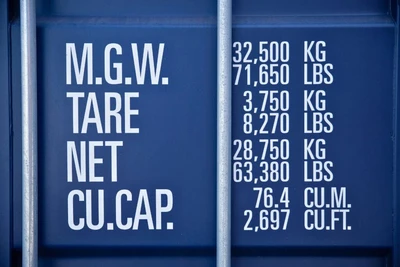 Tare WeightJuly 2, 2025Tare weight is the weight of an empty container, vehicle, or packaging—without any cargo or goods inside. In shipping and logistics, it’s an essential measurement used to calculate the net weight of...view
 What Is Harbor Maintenance Fee (HMF)?September 28, 2025The Harbor Maintenance Fee (HMF) is a U.S. Customs and Border Protection (CBP) fee charged on imports arriving at U.S. ports via ocean freight. It was established under the Water Resources Development...view
 How to Handle In-Transit Shipments Under New 34% U.S. TariffsApril 8, 2025Confused about the new 34% U.S. tariffs on Chinese goods? Learn how in-transit shipments are affected, calculate updated duty rates, and explore cheapest shipping from China to UK solutions with CUCFreight.view
 The Crucial Role of Shipping Agent China to USAMarch 13, 2024In today's globalized world, freight forwarding agents play a pivotal role as vital connectors in international trade. Especially on the bustling trade route from China to the USA, shipping agents...view
 English
 português
 Call us on:
 Email Us:
 International Mayors Exchange Center, No. 55 Shizhou Middle Rd, Nanshan District, Shenzhen Guangdong China

